

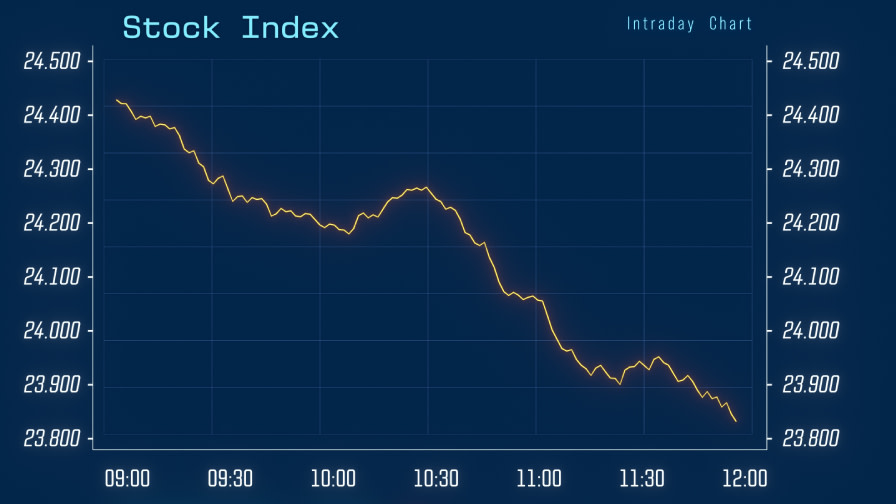
A recent study covering 170 years of financial journalism reveals that we are 97% likely in an AI financial bubble, and leaders should prepare for a crash.
I agree that they do not stop training. But if you take lifetime cost of a single model, then inference trumps training, and this goes for every single model that is not some experiment that doesn’t get used more than a few times.
Except the model is used only for a short time, before a new one is churned out.
Eventually we’ll get there but it’s not the case today IMO.
That’s because we are in a bubble. You can’t stand still in a bubble, you have to keep it growing or you lose most of what you have. If OpenAI stops training, people switch to claude. If Anthropic stops training, people will switch to ChatGPT. I think this is why Altman has been repeatedly screaming to globally stop training models - they can’t take the expenses anymore, but don’t want to lose customers, and for sure they do not want to admit that this is not a business you can make loads of money with.
Yes, and my argument is that because of those things, cloud LLM is rarely getting cheaper because the market leader is pricing it in token instead of power consumption to help subsidize their continuous training. If they stop that, then I guarantee you that the scale of which a big data center can provide compute for cheap will be bonkers.
I mean google IIRC already uses their own home grown inference chip to not rely on nVidia. That alone already cuts unneeded silicone and overhead of general purpose parallel compute accelerator. It’s also how they could have the AI mode search for free when their user base is basically almost the whole internet.
Tokens and total lifetime power consumption become equivalent for any given model tho as soon as training costs for that specific model become insignificant because of inference costs. There are no hardware or software revolutions in sight to actually decouple the two things, unless we start learning to use subatomic particles for transistors - we are already on the edge of miniaturization (and therefor power draw reduction) with these fine structures, and even EUV can only be done by ASML’s machines after ages of research and engineering.
And even if you make these things 1000x times more efficient, as long as you still can provision that same hardware locally, you still do not have to pay the middle man - this is what drives costs up for real.
A practical solution would be to swap completely to just training and licensing. Licensing costs can be set to offset the training costs, eliminating the ruinous running costs.
There really isn’t the big money in this thing, regardless of what the Jensenverse wants to suggest to us, outside of special uses.
Oh but that’s not true. MoE model is VERY different from dense model architecture in which not every parameters would be active at once during the inference computation process. That means if you tie the cost to token, you’d need to adjust the pricing as well. 1M token output of MoE model are not all equal because some of those may have more or less neuron than other. There’s just too much variation if you want to tie the price to token/arbitrary compute unit since the power draw required will be different depending on the actual model architecture, activated neuron, heck even the rng if you don’t use the model for deterministic output. Hence the only good metric is actual power draw during the inference time.
Ok, if i understand this correctly, you mean that with MoE models you are reducing the amount of calculations needed for a specific request. But to get the same quality out of it, doesn’t that mean that you still need the equivalent amount of parameters to a dense model for that specific area, resulting in the same total energy usage? Does it also mean that you need a lot more Ram, because a lot of it stays inactive with these models? And that is what they are already doing, so there’s no additional efficiency to be found there either? Thanks for a response, i like learning :-)
Well, we cannot be sure if the total energy usage would be the same or not is what I’m saying. It may take more tokens but how much is on average? See the issue? No one benchmark model on their power consumption (and to be fair, because it is HARD to get accurate power draw data from the HW to run a certain task. But again, on the scale of the data center they can afford a custom solution).
No problem. I was also behind on this field so my knowledge may be quite dated because I stop following the research after companies just start publishing bigger model as opposed to actual research and novel technique (remember when deepseek can reduce the amount of VRAM needed? Yeah, that’s the kind of thing that I monitor instead of “Anthropic release model X”)